

At the edge of innovation since 1988
Origins
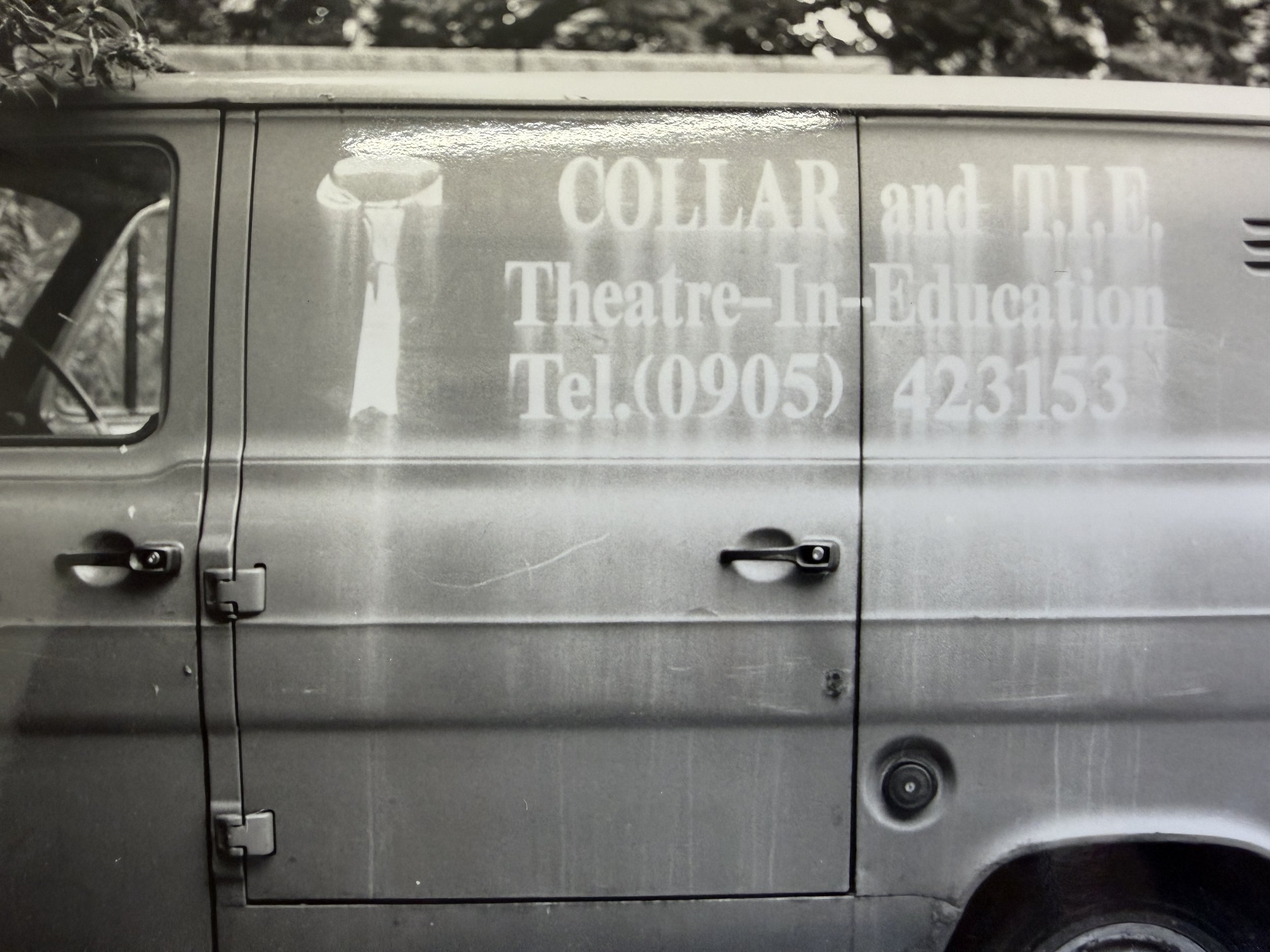
C&T was founded in 1988 as Collar and TIE Theatre-in-Education Company, emerging from the rich tradition of British Theatre-in-Education while simultaneously questioning its limitations. From its earliest years, the organisation was committed to creating participatory theatre experiences for children, young people, and communities, with a particular emphasis on those who might otherwise be excluded from cultural participation. However, the seeds of what would later become Story Systems were present from the beginning: a belief that theatre should not simply be performed for people but created with them, and that participation itself was a powerful tool for learning, empowerment, and social change.
During the 1990s, C&T increasingly found itself operating beyond the conventional boundaries of Theatre-in-Education. Alongside school programmes, the company delivered youth theatre, community arts projects, inclusive work with learning-disabled adults, and large-scale participatory initiatives. What united these diverse activities was an interest in performance as a means of helping communities explore their own experiences, identities, and concerns. The company became particularly interested in performance ethnography: using theatre and storytelling to help communities represent themselves and imagine alternative futures.
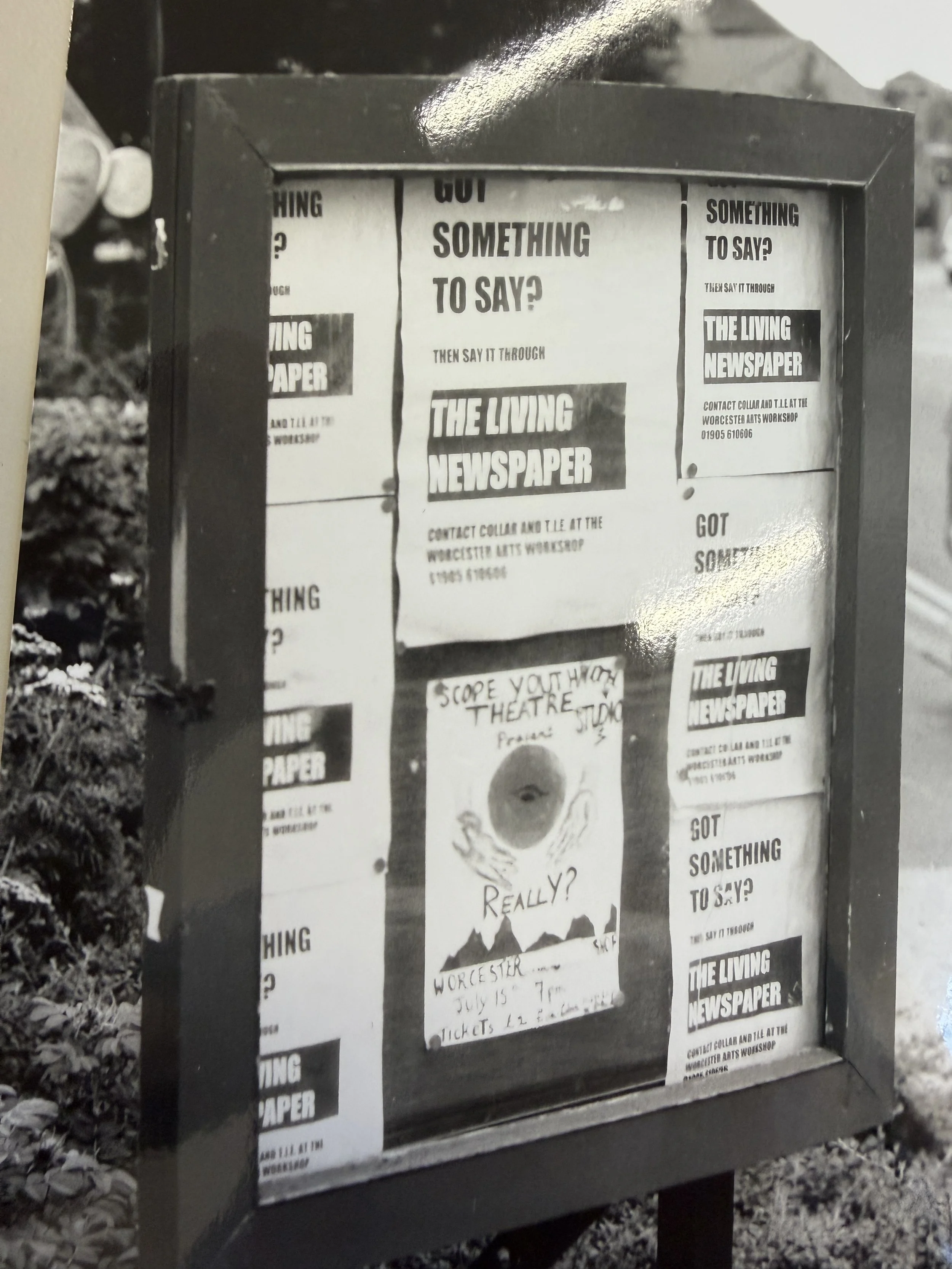
An early Living Newspaper performance, 1995
Developing a new paradigm of applied theatre and creativity through technology
At the same time, C&T recognised that young people's lives were increasingly shaped by media, technology, and global cultural networks. Television, film, games, advertising, and later the internet were becoming as important to the construction of identity as traditional educational or civic institutions. Rather than seeing these developments as threats to theatre, C&T became interested in how dramatic processes might be combined with emerging media forms. This inquiry became a central focus of Sutton's PhD, which argued that drama was no longer confined to theatre buildings but had become embedded throughout contemporary culture.
This led to the development of what Sutton termed the "Dramatic Property": an original dramatic framework that combined participatory theatre methodologies with digital media and cross-platform storytelling. The Dramatic Property was conceived as more than a play or education programme. It was a narrative system capable of operating across performance, workshops, online environments, publications, and community activity.
Three early projects became particularly influential.
The Dark Theatre transformed a murder mystery comic into a collaborative dramatic investigation involving fifty schools. Young people used drama to interpret clues, influence future episodes, and help shape the eventual narrative outcome. The story became a living system rather than a fixed text.
Cambat combined live Theatre-in-Education performance with online participation. Young people explored questions about surveillance and CCTV culture through both theatrical encounters and a web-based dramatic experience that framed participants as hackers investigating a fictional security company.
The livingnewspaper.com reimagined documentary theatre for the internet age by creating a network of schools and community groups who collaboratively generated drama around current events and social issues.
Although these projects were pioneering for their time, they were ultimately early prototypes of what C&T now describes as Story Systems.
Over the following two decades, advances in mobile technology, cloud computing, social media, GPS, motion detection, and digital participation tools transformed what was possible. The original concept of the Dramatic Property evolved into Story Systems: participatory narrative frameworks designed to operate across live, digital, hybrid, educational, civic, and cultural contexts.
Today, Story Systems underpin virtually all of C&T's work. Projects such as Elgar at the Asylum combine promenade performance, archive material, digital interaction, audience roles, and personalised narrative pathways. Participants do not simply watch a story; they become interpreters, investigators, witnesses, and co-creators of meaning.
Similarly, projects such as Woodrow Walks use location-based storytelling to enable children, older adults, learning-disabled participants, and even non-human perspectives to contribute to a shared understanding of place. Story becomes a mechanism for civic participation and environmental awareness.
International projects have extended this approach further. In Korogocho, Nairobi, storytelling and digital technologies have been used to connect social justice concerns with cultural heritage and ancient rock art. In Vienna, the Push/Pull migration project enabled Syrian migrants and local communities to explore identity, displacement, and belonging through participatory storytelling. Work with the New York City Department of Education has demonstrated how Story Systems can support literacy, creativity, inclusion, and teacher collaboration across one of the world's largest school systems.
Throughout this evolution, the underlying principle has remained remarkably consistent. Story Systems are built on the belief that stories are not fixed objects but social infrastructures. They create frameworks through which communities can exchange perspectives, explore complex issues, and imagine collective futures. Theatre remains central to this methodology, but it now operates alongside digital platforms such as Prospero, research tools, participatory data collection, and global networks of collaborators.
Seen in this context, Story Systems are not a departure from C&T's history but the culmination of a thirty-five-year journey. They represent the maturation of ideas first articulated through the Dramatic Property: the fusion of drama, participation, technology, and social purpose into a flexible framework for creating meaning in an increasingly connected world.
Local and global
Although rooted in Worcester and the West Midlands, C&T has always viewed creativity as both a local and global endeavour. This dual perspective reflects a belief that cultural organisations achieve their greatest impact when they are deeply connected to the places they serve whilst simultaneously engaging with wider national and international conversations.
For more than three decades, the company has worked with schools, communities, learning-disabled people, artists, educators, and public sector partners across Worcestershire and the wider region. Projects have explored local heritage, health, education, social inclusion, environmental issues, and community storytelling, helping people to understand, shape, and celebrate the places in which they live.
At the same time, C&T has consistently sought to connect local practice with international ideas, partnerships, and standards of excellence. The company has developed projects and collaborations in locations including New York, Nairobi, Vienna, Sydney, Auckland, and across the United Kingdom, working with universities, cultural organisations, schools, charities, and civic institutions. These relationships bring new perspectives, research, and innovation into the organisation, whilst ensuring that work developed in Worcester is informed by global best practice.
This combination of local commitment and international outlook has become a defining characteristic of C&T's identity. The company sees Worcester not as a peripheral location but as a creative base from which internationally significant work can emerge. Through Story Systems, Prospero, research partnerships, and participatory arts practice, C&T seeks to create work that is locally relevant, globally connected, and benchmarked against the highest standards of artistic, educational, and technological innovation. In doing so, the organisation demonstrates that world-class cultural practice can be developed from, and for, the communities it serves.
Diversity and inclusion at the centre
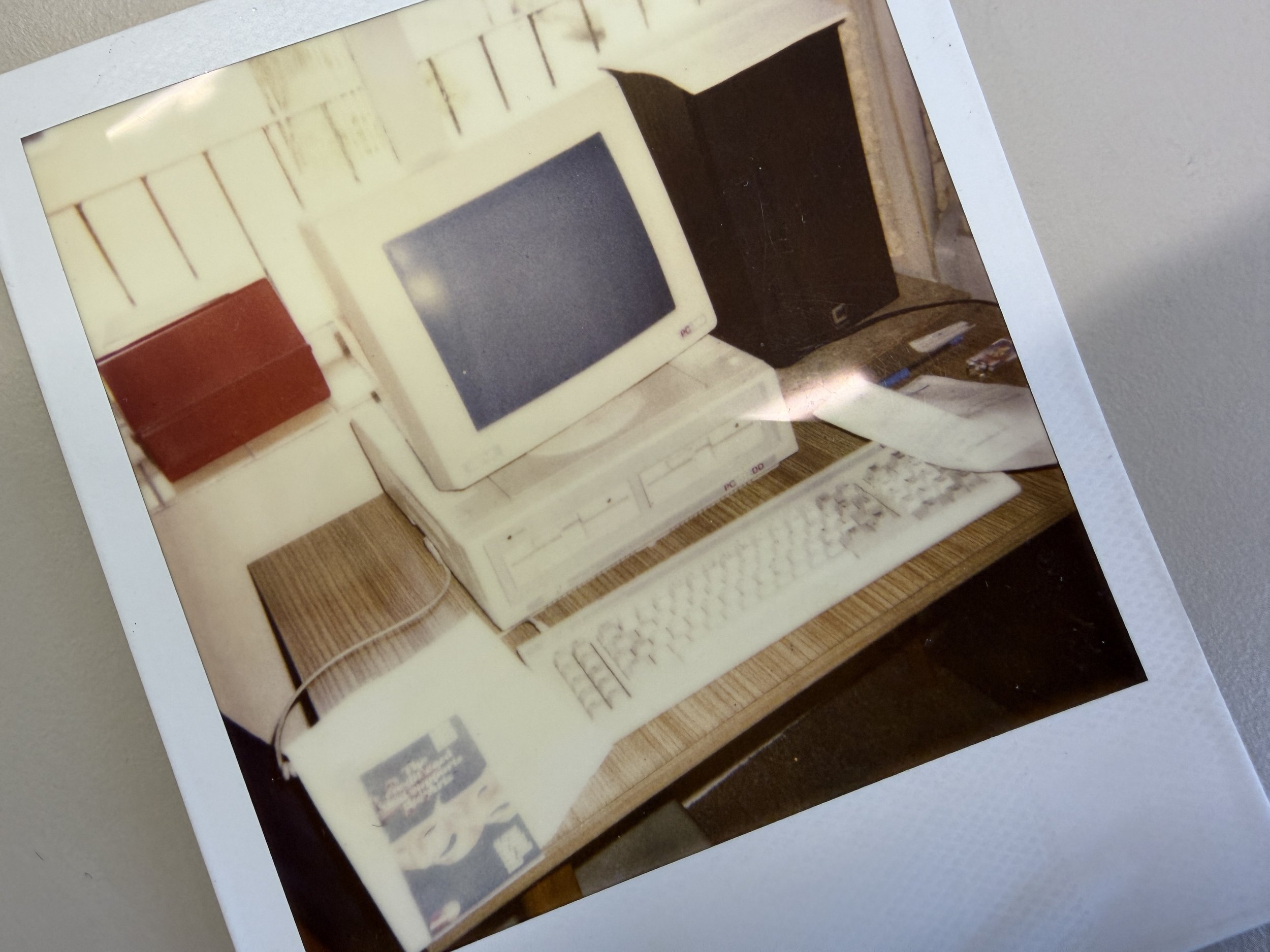
The company’s first computer, 1989.
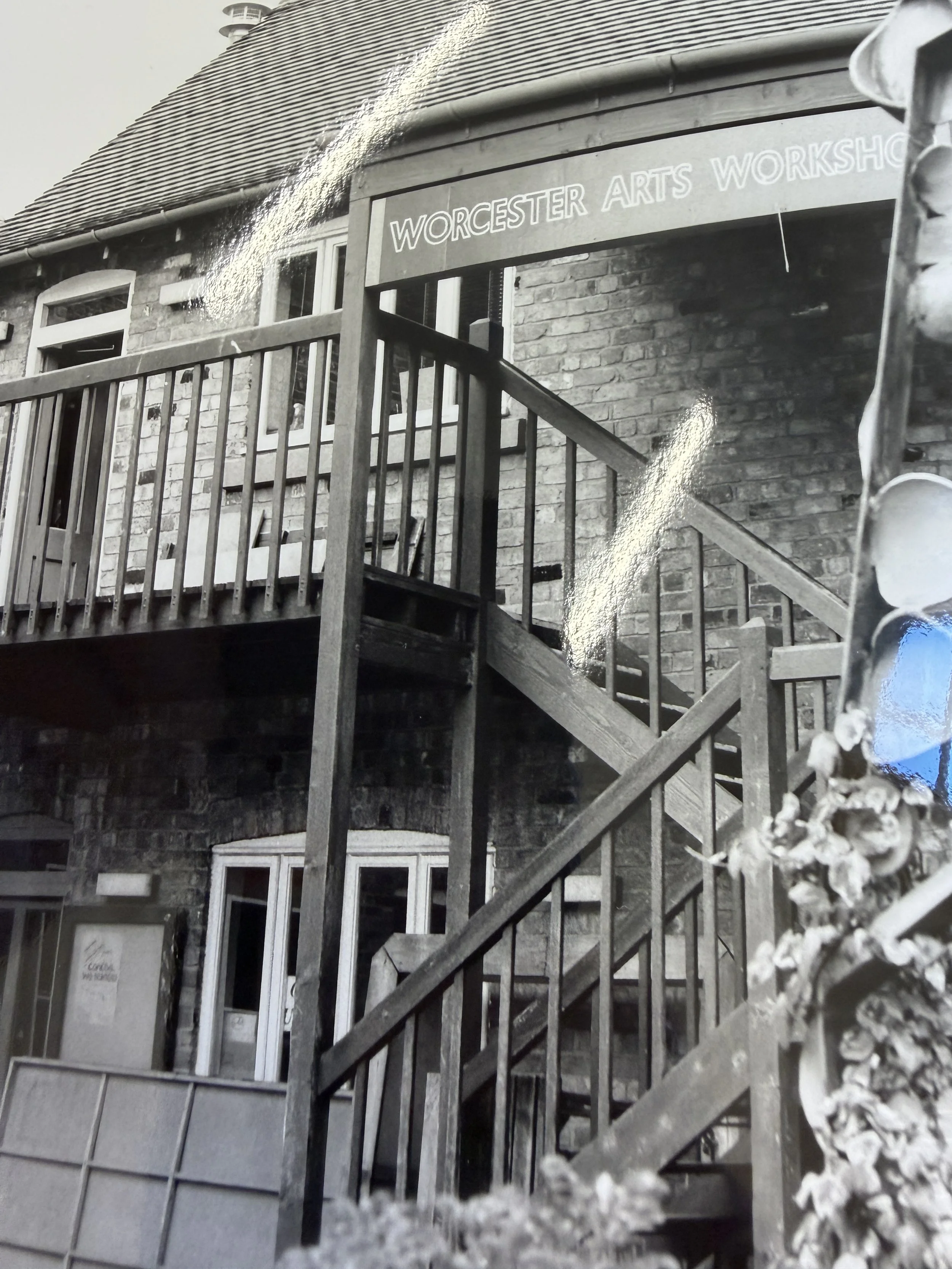
For two years, C&T was based at the Worcester Arts Workshop, which had played a crucial role in developing the company in its early years. The Workshop closed down in 2020.
Alongside its exploration of participatory theatre, digital storytelling, and Story Systems, C&T's history has been shaped by a commitment to ensuring that creativity, culture, and learning are accessible to all. From its earliest work in schools and communities, the company recognised that some voices are less frequently heard within cultural life and has consistently sought to create opportunities for those voices to be represented, valued, and celebrated.
This commitment has been particularly evident in C&T's long-standing work with learning-disabled people, as well as its engagement with young people, community groups, migrants, and individuals facing social, economic, or cultural barriers to participation. Over time, these values have become embedded not only within the company's artistic programmes but also within its organisational structures, governance, partnerships, and employment practices.
Today, inclusion is not viewed as a separate strand of activity but as a principle that underpins the design of every Story System, workshop, performance, research project, and digital platform. Through co-creation, accessible design, equitable recruitment practices, and a culture of continuous learning, C&T seeks to ensure that diverse experiences and perspectives actively shape both the stories it creates and the organisation it continues to become.