Power Up: Reimagining Digital Inclusion Through Creativity
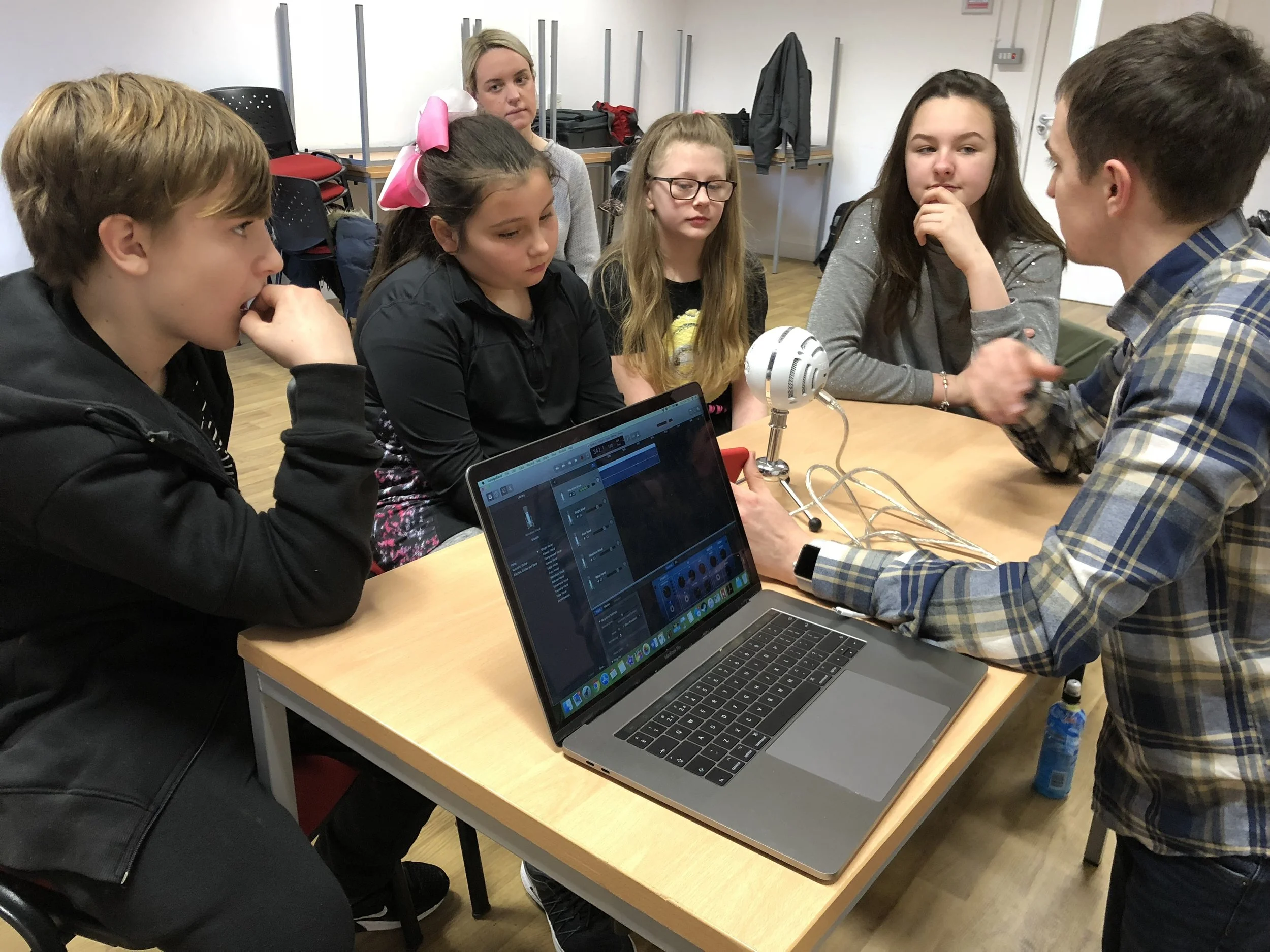
Young people in Bootle working with C&T
Digital inclusion is often described as a question of access to technology. At C&T, we believe it begins with participation.
For more than thirty years, our work has explored the relationship between creativity, technology and learning. From early projects examining media literacy and advertising in the 1990s, through documentary drama and Living Newspaper projects, to more recent work in digital storytelling, we've consistently asked the same question: how can creative participation help people develop the confidence, curiosity and critical understanding they need to thrive in an increasingly digital world?
That question took on renewed importance in 2025, when the Department for Science, Innovation and Technology launched its Digital Inclusion Innovation Fund. The programme sought innovative ways to engage people who face barriers to developing essential digital skills. For C&T, it provided an opportunity to combine decades of participatory practice with Prospero, our digital participation platform, and our growing body of research into Story Systems.
The result was Power Up.
Power Up is a six-session creative learning programme that introduces young people to essential digital skills through imagination, collaboration and play. Rather than teaching technology through conventional instruction, participants became the creative team behind a fictional games company, challenged with developing the next generation of online gaming experiences.
Each workshop began away from the screen. Through drama games and collaborative activities, participants explored how people play, communicate and solve problems together. They then translated those experiences into digital ideas, researching existing games, creating media content, producing promotional trailers and considering online safety, digital communication and responsible participation throughout the design process.
Although highly interactive, the programme was delivered through Prospero rather than by C&T staff travelling to every venue. Each workshop was authored as an online interactive resource containing video demonstrations, practical tasks, branching activities and secure spaces for participants to upload and share their work. This enabled local partners to deliver the programme independently while maintaining a consistent creative framework that could be refined through each iteration.
Power Up was delivered in partnership with Strike A Light (Gloucester), Redditch United Football Club (Worcestershire) and The Inclusion Network (Bootle, Merseyside). Across four programme cohorts between November 2025 and March 2026, the resources were continually improved in response to participant feedback and observation, creating a programme that became stronger with every delivery.
One of C&T's core principles is that evaluation should be woven into creative practice rather than added at the end. Using Prospero's integrated research tools alongside independent evaluation, we were able to understand not simply whether the project worked, but how participants' confidence developed throughout the programme.
The findings were encouraging. Participants began the programme with relatively low confidence in basic computer skills, averaging just 2.45 out of 5. By the end, confidence in using computers independently had increased to 4.45 out of 5. Ninety-five per cent of participants reported feeling more digitally included after taking part, while 93% said they would recommend the programme to other young people. Overall, the workshops received an effectiveness rating of 4.76 out of 5, alongside consistently high scores for relevance and engagement.
The evaluation also revealed something less easily measured. Young people described feeling more confident using technology at school, more willing to explore unfamiliar digital tools and more comfortable working creatively with others. Those outcomes reinforce an important belief at the heart of C&T's practice: digital inclusion is not simply about teaching technical skills. It is about enabling people to participate confidently, critically and creatively in contemporary society.
Power Up has become an important milestone in C&T's continuing research into creative technology, participation and learning. It demonstrates how Story Systems, supported by Prospero, can provide a scalable model for developing digital confidence across schools, community organisations and cultural settings, while retaining the creativity and human relationships that make learning meaningful.
The project is already informing the next stage of our work. Later this year we hope to launch ActSmart, a new programme that builds on the lessons of Power Up to support young people in developing the creative, digital and collaborative capabilities they will need in education, employment and everyday life.
For us, Power Up is more than a successful project. It represents another step towards a simple but increasingly important idea: that creativity is not an optional extra in digital inclusion—it is one of its most powerful foundations.