Elgar at the Asylum moves audiences and changes perspectives
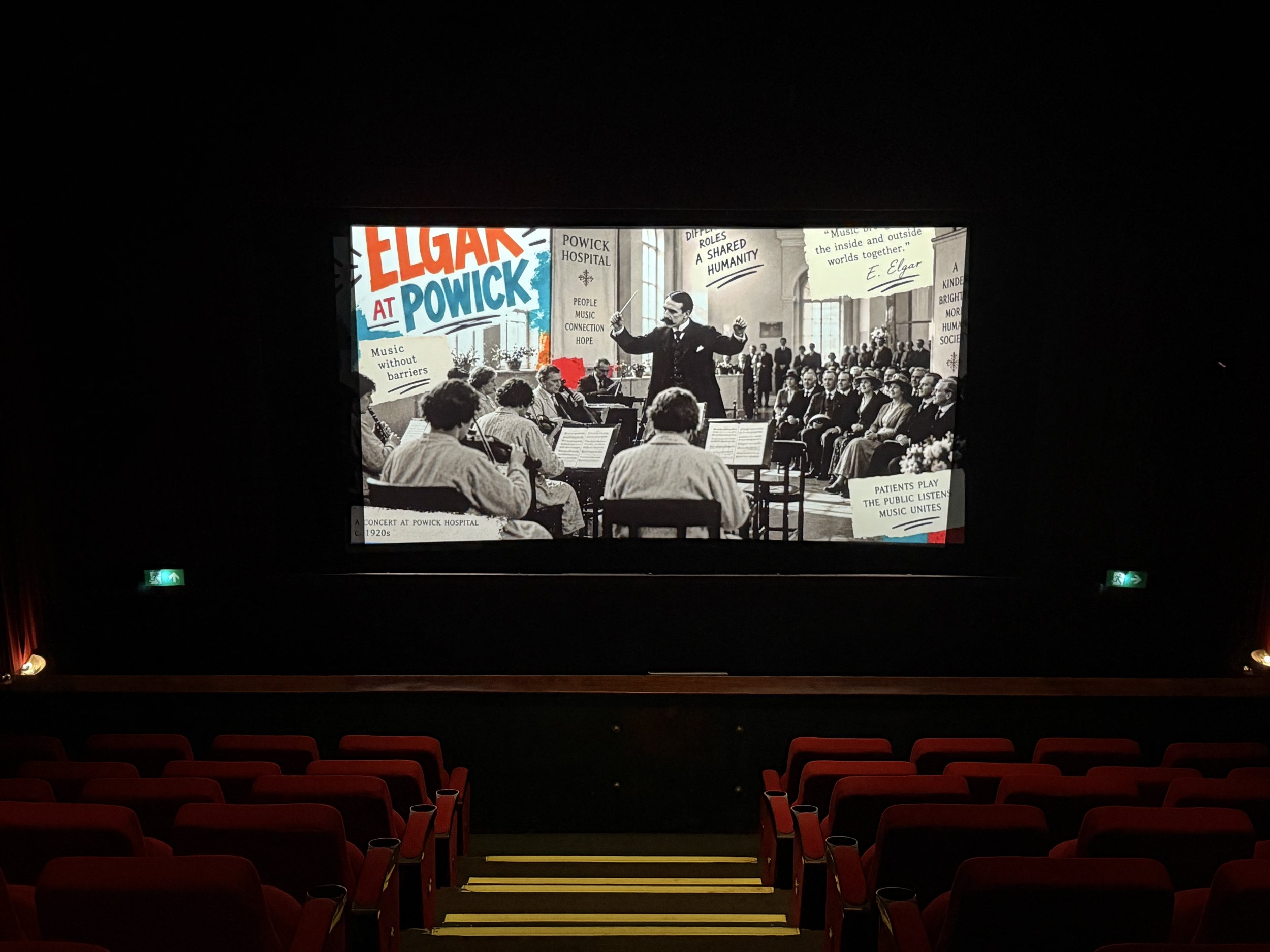
Elgar at the Asylum at Malvern Cinema
A powerful weekend at Malvern Theatres showed what inclusive performance can achieve. Audiences rated Elgar at the Asylum 94% success rating for engagement.
Elgar at the Asylum took audiences into a less familiar chapter of Edward Elgar’s life: his time as composer in residence at Powick Asylum. Through a promenade performance combining dance, physical theatre, music, visual art, documentary material and digital storytelling, it asked audiences to consider the lives of people who experienced institutional care—and how that history connects with the treatment of learning disabled people today.
C&T conceived and produced the project with The Monday Night Club, which represents 170 learning disabled people in Worcester. We played a pivotal role in bringing together partners whose different strengths could make that story vivid: Dancefest, Vamos Theatre and artist Jason Wilsher-Mills. Their contributions created a performance with many voices and forms of expression, with learning disabled and neurodiverse performers at its heart.
The audience evaluation gives a strong indication of its impact. The 37 people who answered the scored questions rated engagement at an average of 9.46 out of 10 and their overall experience at 9.38. They rated the artistic elements’ effectiveness in conveying the project’s themes at 9.38.
The performance reached beyond an immediate emotional response. Audiences rated it 8.05 out of 10 for increasing their knowledge of the historical context of learning disability care, 7.97 for deepening their understanding of contemporary challenges, and 8.78 for encouraging critical reflection on society’s approaches to disability. 57% said it had changed their perspective on the historical treatment of learning disabled people, either somewhat or significantly.
Those figures are backed by responses that convey the experience more personally. Audience members described the music and movement as powerful and the dancing as deeply moving. One said the performance “gave a face to those in the past.” Another found optimism in seeing a neurodiverse cast demonstrate what less-heard voices have to offer.

Audiences celebrate Elgar at the Asylum at our Elgar themed silent disco.
C&T used its Prospero digital platform as a way of connecting the many interpretations within Elgar at the Asylum. Dance, physical theatre, visual art, documentary material and spoken word each approached the subject from a different angle. Without losing those differences, we used audio and digital storytelling to carry audiences between them, introducing ideas, making connections and giving shape to the journey through Malvern Theatres. It became a narrative bridge: one that helped audiences understand where they were in the story while remaining open to the surprise and immediacy of each encounter. That made the performance more than a sequence of separate contributions. It gave the work a coherent, dynamic rhythm, allowing each artistic form to deepen what came before and prepare the ground for what followed. The audience response to the audio guide suggests how valuable that connecting role can be when ambitious, interdisciplinary work asks people to move between different voices and perspectives. As one audience member put it: “I loved the audio guide, it helped make sense of the experience and gave a good structure!”
That response points to considerable future potential. Prospero did not replace the immediacy of live performance; it helped audiences navigate it, bringing documentary material and different artistic voices into a coherent experience. The evaluation measures the artistic elements together, so it cannot assign a separate score to the technology. It does, however, show how effective their combination was.
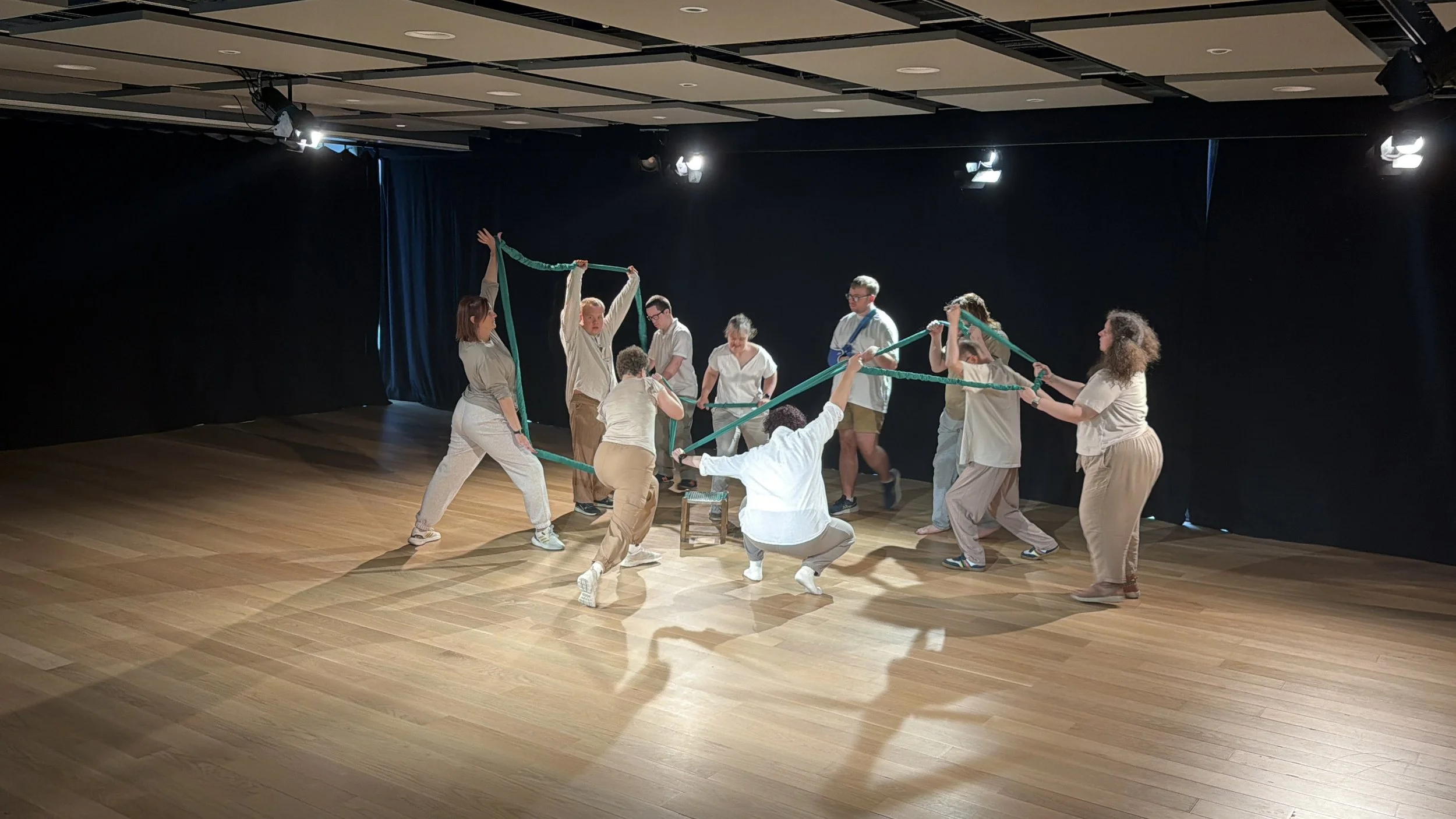
One of two DanceFest interpretations as part of the five performances over two days.
The impact may continue beyond the theatre. Respondents rated their likelihood of discussing the themes with friends, family or colleagues at 9.03 out of 10, and their likelihood of considering support for organisations empowering learning disabled people at 9.00.
Elgar at the Asylum succeeded because its diversity shaped the work itself: different partners, performers and art forms brought different ways to understand a difficult history. Audiences left moved, better informed and ready to keep talking. For C&T, it is a compelling example of what becomes possible when inclusive collaboration and digital storytelling work together.
Elgar at the Asylum was made possible with the support of Arts Council England and The National Lottery Heritage Fund. Their investment enabled artists, learning disabled performers and partner organisations to work together on an ambitious production that brought an overlooked history to life. It also gave us the opportunity to test how live performance and Prospero’s digital storytelling can help audiences engage with different perspectives. We are grateful for their support and for the National Lottery players who make this funding possible.